Japan to Launch Mars Moon Sample-Return Mission on October 20; NASA Joins Historic Phobos Exploration
Japan's space agency JAXA is scheduled to launch its Martian Moons eXploration (MMX) mission on October 20, 2026, using the H3 rocket from Tanegashima Space Centre. Supported by NASA, the mission will study Mars' moons Phobos and Deimos, collect at least 10 grams of material from Phobos and return the samples to Earth in 2031. The launch will also be an important test for Japan's H3 rocket following previous technical setbacks.
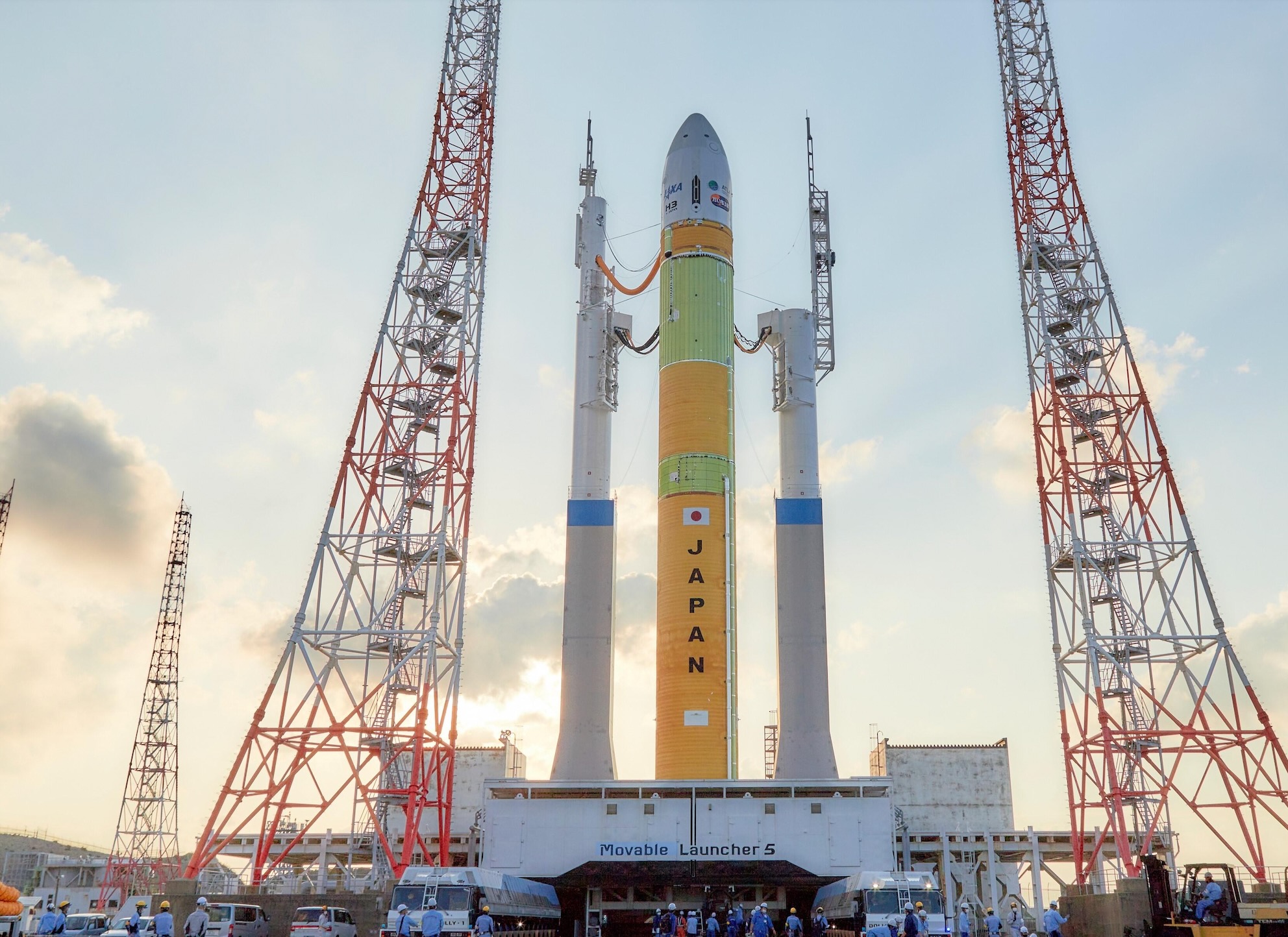
Tokyo: Japan is preparing to launch an ambitious space mission to explore Mars' two mysterious moons, Phobos and Deimos, and bring samples from one of them back to Earth. The Japan Aerospace Exploration Agency (JAXA) has scheduled its Martian Moons eXploration (MMX) mission for October 20, 2026, aboard the country's next-generation H3 rocket.
The launch is planned for 1:11 am Indian Standard Time (IST) from the Tanegashima Space Centre in Japan.
Supported by NASA and other international partners, the mission aims to investigate the origins of Mars' moons and return material collected from Phobos to Earth in 2031.
Japan's MMX Mission to Explore Phobos and Deimos
The Martian Moons eXploration mission is designed to study Phobos and Deimos, two small natural satellites orbiting Mars.
Scientists are particularly interested in understanding how these moons formed. One possibility is that they originated from captured asteroids, while another suggests they formed from debris associated with a major impact involving Mars.
By studying their surfaces and composition, researchers hope to gather evidence that could help explain their origins.
The MMX spacecraft is expected to reach the Martian system in 2027, where it will observe both moons and conduct detailed scientific investigations.
One of its primary objectives is to collect at least 10 grams of surface material from Phobos and transport it safely back to Earth.
NASA Contributes Scientific Instruments and Technology
NASA is playing an important supporting role in Japan's MMX mission by providing scientific instruments, sampling technology and operational assistance.
One of its major contributions is MEGANE, an instrument designed to analyse the elemental composition of Phobos.
The instrument will help scientists identify chemical elements present on the moon's surface and provide valuable information about its geological characteristics.
NASA is also contributing a pneumatic sampling system intended to collect material from Phobos.
In addition, the American space agency will provide communications and navigation support during the mission.
NASA is expected to receive approximately 15% of the returned samples for scientific curation and research.
What Is Japan's H3 Rocket?
The H3 is Japan's next-generation flagship launch vehicle, developed jointly by JAXA and Mitsubishi Heavy Industries.
Designed to replace the older H-IIA rocket, the H3 aims to provide a more affordable, flexible and reliable system for launching spacecraft and satellites.
Depending on its configuration, the rocket can stand up to approximately 63 metres tall.
Its design allows different combinations of main engines and solid rocket boosters to accommodate a variety of missions.
JAXA has targeted a launch price of more than $30 million for a lighter H3 configuration without solid rocket boosters. However, this figure does not represent the confirmed cost of the MMX mission launch.
The rocket's development budget reportedly increased from approximately $1.2 billion to more than $1.5 billion.
The investment reflects Japan's efforts to strengthen its independent space-launch capabilities and expand its presence in the international commercial launch market.
Why Is the H3 Launch Important?
The H3 rocket will carry the MMX spacecraft beyond Earth and place it on a trajectory towards Mars.
Once the spacecraft begins its interplanetary journey, the rocket's primary role will be complete.
The upcoming launch is particularly significant because the H3 programme has experienced technical challenges.
Its inaugural flight in March 2023 ended in failure, prompting engineers to investigate and improve the launch system.
Although subsequent missions demonstrated progress, the rocket's eighth flight also reportedly failed, leading to another investigation.
A successful MMX launch would represent an important milestone for Japan's efforts to establish the H3 as a dependable launch vehicle for scientific and commercial missions.
Mars Moon Samples Expected to Return in 2031
Following its planned launch in October 2026, the MMX spacecraft is expected to travel for approximately one year before reaching Mars in 2027.
The spacecraft will then conduct scientific observations, study the Martian moons and attempt to collect samples from Phobos.
After completing its exploration activities, the mission will begin its return journey, with the sample capsule expected to reach Earth in 2031.
Scientists will examine the collected material to better understand the history of Phobos, the evolution of the Martian system and the processes that shaped the early Solar System.
Japan Aims to Strengthen Its Global Space Presence
The MMX mission represents a major step in Japan's planetary exploration programme and highlights growing international cooperation in space science.
For JAXA, the mission combines two important objectives: exploring a previously unsampled Martian moon and demonstrating the capabilities of its H3 launch vehicle.
If successful, the mission could provide scientists with unprecedented physical evidence about Phobos while strengthening Japan's position in deep-space exploration.