Internet Access Is a Fundamental Right for Children, Supreme Court Rejects Blanket Age-Based Ban
The Supreme Court has rejected a blanket age-based ban on internet access for children, observing that the right to use the internet is protected under Articles 19(1)(a) and 21 of the Constitution. Hearing concerns about online child sexual abuse material, the court called for stronger parental controls, child-safety features and content removal mechanisms. It also directed the Centre to develop a national database of confirmed abusive material and establish technological guidelines for detecting and removing such content.
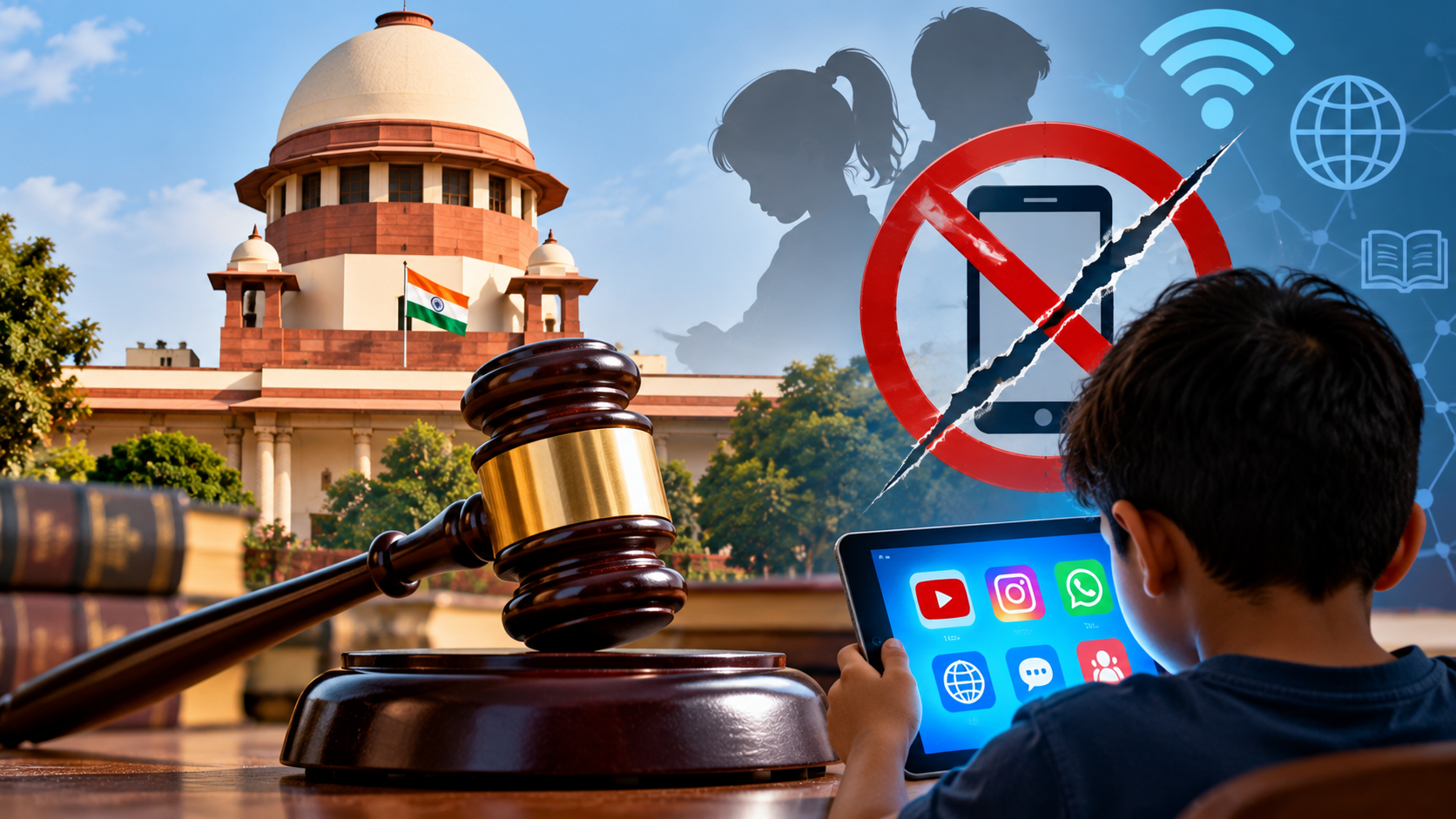
New Delhi: The Supreme Court of India has recognised access to and use of the internet as a fundamental right that extends to children, rejecting the idea of imposing a blanket age-based ban on internet usage. The court emphasised that protecting children from online exploitation must not come at the cost of denying them their constitutional freedoms.
A bench comprising Justices J. B. Pardiwala and K. V. Chandran made the observations while hearing applications concerning the circulation of child sexual abuse material (CSAM) on social media platforms.
The court stressed that children's safety and their right to access the internet must be protected together.
Supreme Court Recognises Children's Digital Rights
The Supreme Court observed that the right to access and use the internet falls within the protections of Article 21 and Article 19(1)(a) of the Indian Constitution.
According to the bench, children enjoy constitutional rights regardless of their age, and those rights cannot be completely denied simply because they are minors.
The judges rejected the argument that restricting internet access for children through a blanket age-based prohibition would effectively protect them from online dangers.
The court noted that children would not necessarily stop accessing the internet merely because a legal prohibition was introduced.
Instead, it called for stronger safeguards to ensure children can use digital platforms safely.
Strict Measures Proposed Against Child Sexual Abuse Material
The observations came during proceedings involving applications filed by child rights organisation Just Rights for Children Alliance and another applicant.
The applicants alleged that several social media platforms were failing to fulfil their legal obligations to report child sexual exploitation and abuse material to Indian authorities.
The court expressed serious concern over the continued circulation of such material online, including allegations that abusive content was being promoted through paid links and websites.
It also criticised the lack of sufficient initiative by authorities and digital intermediaries to protect victims and prevent repeated circulation of harmful content.
Stronger Parental Controls and Child-Safety Features
Rather than prohibiting children from accessing the internet, the Supreme Court called for stricter digital safety mechanisms.
The court highlighted the need for enhanced parental controls, child-friendly modes on social media platforms and effective systems for identifying and removing abusive material.
These safeguards are intended to reduce children's exposure to harmful online content while preserving their ability to access information, communicate and express themselves.
The bench maintained that protecting children from exploitation and respecting their freedoms are complementary responsibilities.
Centre Directed to Develop National Database
The Supreme Court directed the Central Government to develop a national database containing digital identifiers and URLs associated with confirmed child sexual abuse material.
The proposed system is intended to help authorities and online platforms identify and remove previously detected abusive content more effectively.
The court also directed the Centre to formulate guidelines and standard operating procedures for technological measures such as perceptual hash-matching and URL listing.
Perceptual hash-matching is a technology used to identify identical or visually similar images and videos, even when the files have undergone certain modifications.
Such systems could help prevent previously identified abusive material from being repeatedly uploaded and circulated across digital platforms.
Court Calls for Greater Accountability from Social Media Platforms
The applicants had sought uniform reporting procedures, a centralised reporting mechanism and stronger action against online intermediaries that fail to comply with legal obligations.
The Supreme Court acknowledged the need for coordinated efforts among government agencies, technology companies and law enforcement authorities.
The court's observations underline the importance of creating an online environment in which children can exercise their digital rights without being exposed to exploitation.
The matter highlights the growing responsibility of social media platforms and authorities to strengthen child protection mechanisms while respecting constitutional freedoms.