Diwali Price Rise: Tur Dal at ₹160, Country Matki at ₹200 per Kg as Grocery Costs Soar in Maharashtra
Rising prices of pulses, grains and essential groceries are putting pressure on household budgets ahead of Diwali. In Otur, Pune district, tur dal is selling at ₹160 per kg, while country-grown matki has reached ₹200 per kg. Drought-related crop losses, reduced production and uncertainty over farm incomes are adding to the financial burden on consumers.
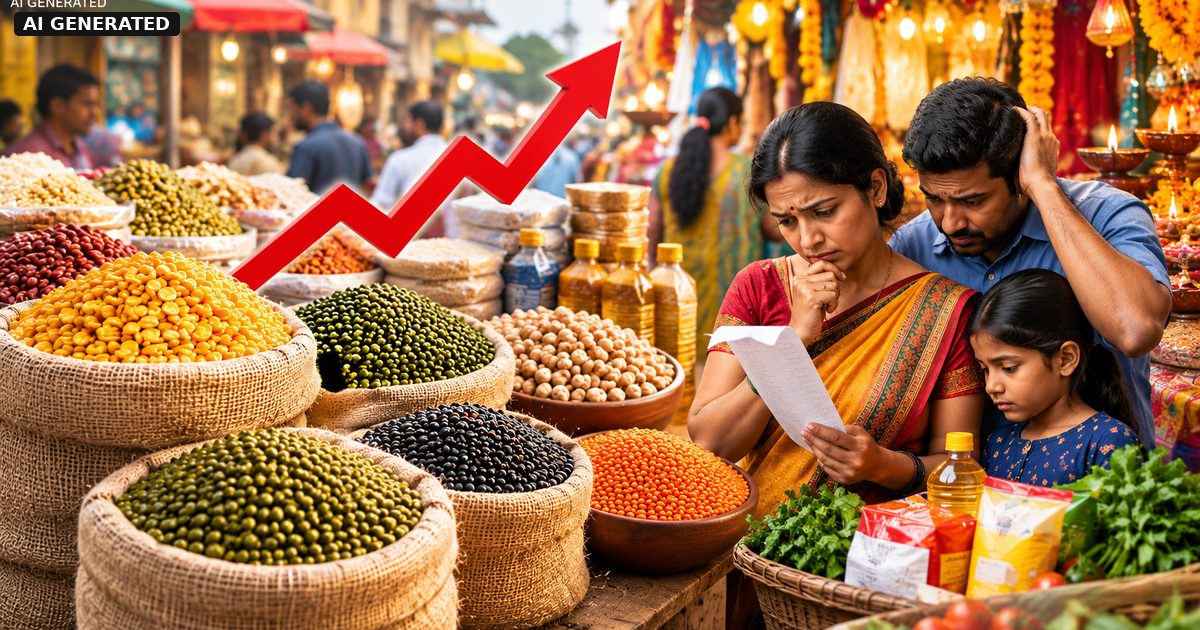
Rising Grocery Prices Put Pressure on Household Budgets
Otur, Pune: With Diwali approaching, rising prices of essential food items are making it increasingly difficult for households to manage their expenses. Higher prices of pulses, grains and other grocery items are putting additional pressure on family budgets, particularly for people with limited incomes.
Consumers are paying more for everyday essentials, including pulses, rice, cooking oil, sugar, wheat, jowar and bajra. In rural areas, many families depend on agriculture and allied activities for their livelihoods. Drought conditions, crop damage and lower production have added to financial uncertainty for farming households.
The rising cost of essential goods is also affecting families with fixed incomes. Expenses such as rent, electricity bills, children's education, medical treatment, travel and groceries are leaving households with less money to save.
Tur Dal at ₹160 per Kg; Matki Reaches ₹200
Retail prices of several pulses have climbed to high levels, increasing the cost of everyday cooking.
According to the report, the current retail prices of major pulses are:
- Tur dal: ₹160 per kg
- Moong dal: ₹130 per kg
- White urad dal: ₹140 per kg
- Black urad dal: ₹140 per kg
- Chana dal: ₹110 per kg
- Masoor dal: ₹100 per kg
- Whole masoor: ₹100 per kg
Prices of other pulses are also putting pressure on consumers. Matki is selling for up to ₹150 per kg, while country-grown matki has reached ₹200 per kg. Kesar Kasturi matki is priced at ₹180 per kg.
Other reported retail prices include:
- Cowpea (chawli): ₹100–₹110 per kg
- Kabuli chana: ₹120 per kg
- Large kabuli chana: ₹140 per kg
- Green moong: ₹120 per kg
- Chickpeas: ₹90 per kg
- Black peas: ₹100 per kg
These prices are making it harder for families to balance their regular grocery shopping with additional festive expenses.
Drought and Lower Production Add to the Burden
Drought conditions and uncertainty over agricultural output have added to the concerns surrounding essential commodity prices. Reduced crop production can affect the availability of agricultural goods and put pressure on household budgets, particularly in rural areas dependent on farming.
The impact is not limited to farmers. Families with fixed monthly incomes are also finding it difficult to manage rising grocery bills while meeting other regular expenses.
Speaking about the situation, wholesale trader Kalpesh Gugale of Narayangaon highlighted the financial strain caused by rising prices of essential commodities during the festive season.
Consumers are hoping for relief through more stable prices, as increasing costs of food grains and groceries threaten to make Diwali shopping more expensive for ordinary families.