Delhi: Cockroach Janta Party Leaders Sent to Jail for 5 Days After Jantar Mantar Protest
Two senior leaders of the Cockroach Janta Party (CJP), Saurav Das and Ashutosh Ranka, have been remanded to five days of judicial custody following their arrest for allegedly entering the restricted protest site at Jantar Mantar in New Delhi. The activists appeared before a magistrate on Wednesday after climbing over barricades and entering the venue despite restrictions. Another activist, Ajinkya Shinde, was released on a personal bond. The arrests have triggered criticism from opposition leaders, including Rahul Gandhi, Mamata Banerjee and Arvind Kejriwal, amid ongoing protests demanding electoral reforms and the resignation of Chief Election Commissioner Gyanesh Kumar.
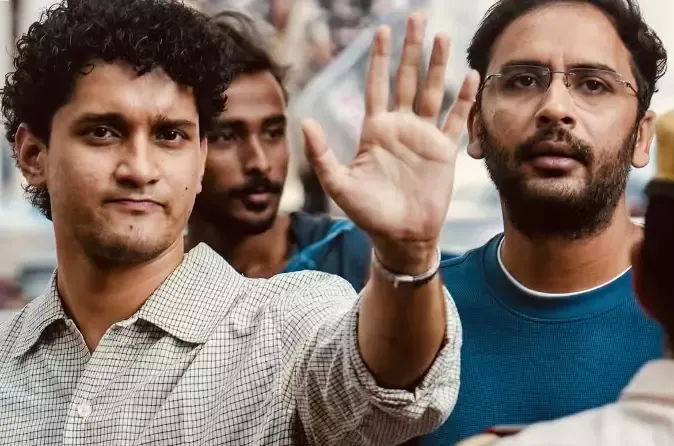
CJP Leaders Sent to Judicial Custody for Five Days
Two leaders of India's Cockroach Janta Party (CJP), Saurav Das and Ashutosh Ranka, have been sent to judicial custody for five days after being arrested in connection with a protest at Jantar Mantar in New Delhi.
The two activists appeared before a magistrate on Wednesday following their detention on Tuesday. According to the report, they were part of a group that climbed over a locked gate and crossed police barricades to enter Jantar Mantar, which had recently been removed from Delhi's list of authorised protest venues.
Delhi Police accused Das, Ranka and fellow activist Ajinkya Shinde of trespassing, violating prohibitory orders, breaching a peace bond and obstructing public officials. The activists have denied the allegations.
Delhi's Special Executive Magistrate Court remanded Das and Ranka to five days in judicial custody, while Shinde was released on a personal bond. The two leaders can approach a higher court to seek bail.
Rahul Gandhi and Other Opposition Leaders Condemn Arrests
The arrests have drawn criticism from several opposition leaders. Congress leader Rahul Gandhi condemned the action, describing it as an “act of cowardice” and expressing support for peaceful demonstrations at Jantar Mantar.
Gandhi said that students, young people, journalists and opposition groups were raising their voices in support of constitutional rights.
Former West Bengal Chief Minister Mamata Banerjee and former Delhi Chief Minister Arvind Kejriwal also expressed support for the CJP and criticised the arrests through social media posts.
CJP founder Abhijeet Dipke, who was travelling to Delhi following the arrests, accused the government of suppressing dissent. According to news agency PTI, he challenged Prime Minister Narendra Modi to “declare the Emergency officially”, drawing a comparison with the Emergency imposed in India during the 1970s under then Prime Minister Indira Gandhi.
Activists Enter Jantar Mantar Despite Restrictions
The arrests followed days of protests demanding electoral reforms and the resignation of Chief Election Commissioner Gyanesh Kumar over alleged irregularities in electoral rolls.
On Tuesday, videos shared by Dipke and other CJP leaders showed Das and Ranka climbing over police barricades, carrying Indian flags and raising slogans inside Jantar Mantar.
“You cannot denotify the resistance,” Dipke wrote on X.
Jantar Mantar has long been associated with public demonstrations in the national capital. However, Delhi Police recently removed it from the list of authorised protest sites and designated three alternative locations: Ramlila Maidan, Burari Ground and CBD Ground.
The CJP criticised the decision, arguing that moving demonstrations away from Jantar Mantar would reduce their visibility and make it more difficult for protesters to draw public attention to their demands.
CJP Raises Questions Over Access to Legal Assistance
Ratna Singh, head of the CJP's legal team, alleged that the arrested activists were denied access to lawyers for several hours.
She also claimed that they were taken to Parliament Street Police Station in a private vehicle at approximately 3 am local time.
Singh rejected the police allegation that CJP leaders had called on others to join the demonstration at Jantar Mantar, describing the claim as false and stating that no public call had been made.
These allegations form part of the dispute surrounding the arrests. The police allegations against the activists have been denied, and the case remains subject to legal proceedings.
Earlier Protests Led to Widespread Detentions
The latest arrests followed a weekend of demonstrations during which Das, Ranka, Shinde and Dipke were taken into preventive custody ahead of planned protests at Jantar Mantar. They were subsequently released by a magistrate.
Delhi Police imposed extensive security restrictions across the capital to prevent demonstrators from reaching the protest site. Several metro stations were closed, and thousands of police and paramilitary personnel were deployed.
Thousands of people, including journalists, were detained and later released. Videos from the demonstrations reportedly showed police personnel forcibly moving some protesters and pushing them into buses.
The latest developments have intensified the dispute over where citizens can organise demonstrations in the national capital.
Electoral Roll Revision at the Centre of the Dispute
The CJP has been demanding the resignation of Chief Election Commissioner Gyanesh Kumar over alleged irregularities linked to the Special Intensive Revision (SIR) of electoral rolls.
The controversy intensified after The Indian Express reported that Kumar had allegedly disregarded objections raised by fellow election commissioners Sukhbir Singh Sandhu and Vivek Joshi regarding changes to voter registration. The report stated that concerns had been raised at least 14 times over 10 months.
The Election Commission has rejected allegations of wrongdoing and maintained that its decisions were unanimous. Opposition parties, meanwhile, have argued that the voter verification exercise could affect eligible voters and have questioned its impact on the electoral process.
Although the CJP and opposition parties have not organised joint protests, their demonstrations have coincided in recent days. Rahul Gandhi has also been among politicians, lawyers and journalists detained during protests across several cities, according to the report.
From Online Satire to a Pressure Group
The Cockroach Janta Party emerged from student-led demonstrations earlier this year over alleged examination irregularities and demands for education reforms. Weeks of protests led by the movement culminated in the resignation of Union Education Minister Dharmendra Pradhan.
The group initially began as an online satire movement after Chief Justice of India Surya Kant compared some unemployed young people to cockroaches during a court hearing in May. He later said his remarks had been misinterpreted.
The comment subsequently became a rallying point for young people raising concerns about unemployment, examination irregularities and government accountability. The CJP has since developed into a wider pressure group, using protests to highlight these issues.