Pune Water Crisis: Khadakwasla Canal Supply Faces 10% Cut; Rabi Irrigation Cycle May End Early, Farmers Worried
The Maharashtra government has directed a 10% reduction in water supply from the Khadakwasla irrigation project, raising concerns that the ongoing 45-day Rabi irrigation rotation may end early. The four dams currently hold 25.42 TMC of water, compared with 29.04 TMC during the same period last year. With 1.90 TMC already released from the planned 4 TMC allocation, farmers in Haveli, Daund, Indapur and Baramati are awaiting a revised irrigation schedule.
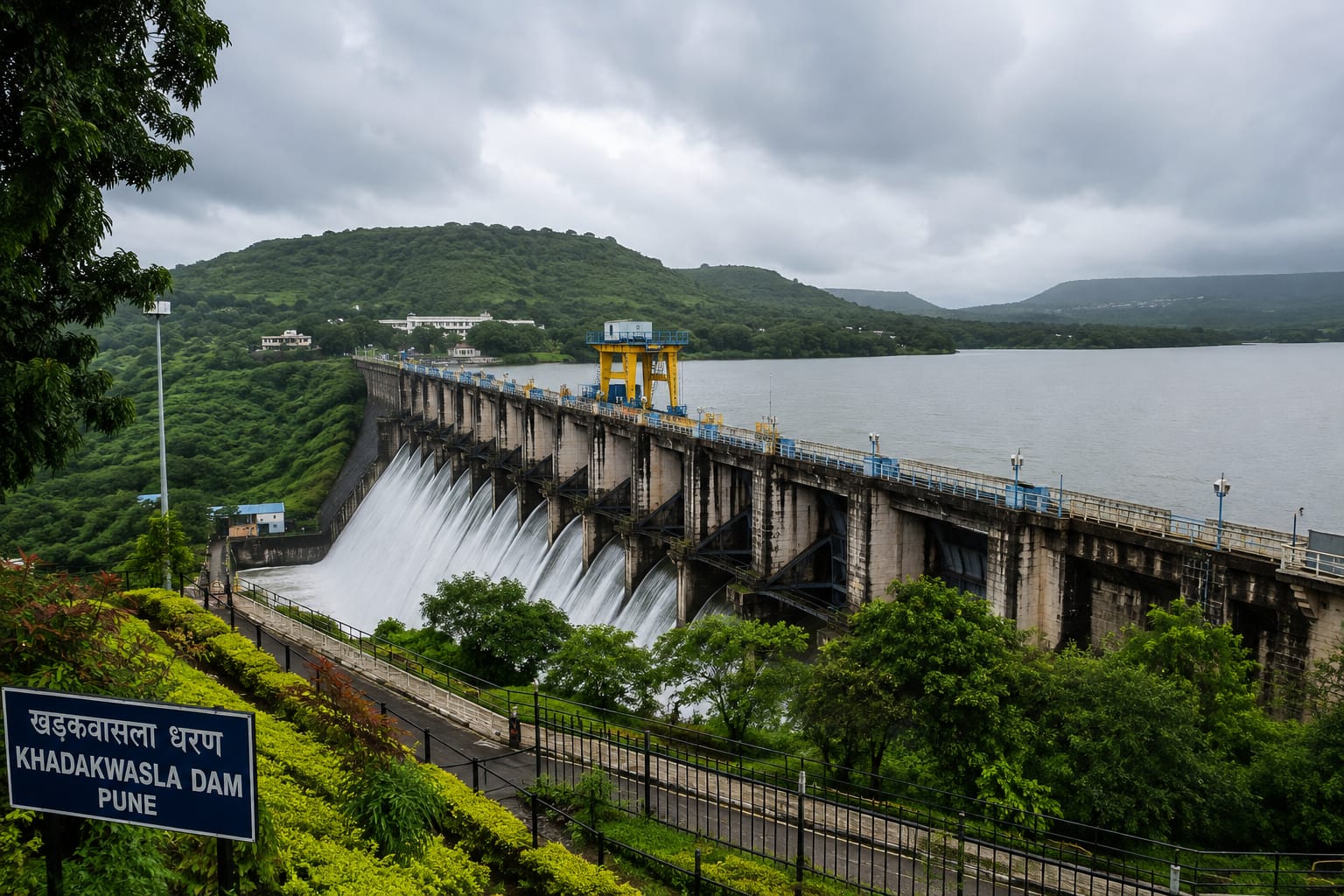
Pune: Farmers across Haveli, Daund, Indapur and Baramati could face reduced irrigation water availability during the ongoing Rabi season after the Maharashtra government directed the Water Resources Department to reduce water supply from the Khadakwasla irrigation project by 10%.
The decision has raised concerns that the ongoing 45-day Rabi irrigation rotation, which began on September 25, may be shortened. However, officials have not yet confirmed whether canal operations will stop before the scheduled completion date.
The proposed reduction comes as water reserves in the Khadakwasla dam system remain significantly lower than during the corresponding period last year.
Khadakwasla Dam Storage Drops by 3.62 TMC Compared to Last Year
The four reservoirs forming the Khadakwasla dam system—Khadakwasla, Panshet, Varasgaon and Temghar—currently hold a combined 25.42 thousand million cubic feet (TMC) of water, representing 87.18% of their total storage capacity.
During the same period last year, the reservoirs held 29.04 TMC, equivalent to 99.60% capacity.
This represents a year-on-year decline of 3.62 TMC, prompting concerns over water availability for agriculture and other essential requirements.
Despite substantial rainfall during the monsoon, the current storage levels have created challenges for irrigation planning.
Rabi Irrigation Rotation May Be Shortened
The Water Resources Department began the Rabi irrigation rotation on September 25, with a planned duration of 45 days.
Water is currently being released through the Khadakwasla canal network at approximately 1,100 cubic feet per second (cusecs).
Under the original plan, officials intended to release 4 TMC of water during the rotation to meet agricultural and drinking water requirements in Haveli, Daund, Indapur and Baramati.
Of this allocation, approximately 1.90 TMC has already been released, leaving 2.10 TMC under the original schedule.
However, officials have indicated that the government's 10% reduction directive could require a substantial revision of the remaining allocation.
According to preliminary departmental estimates, the reduction could affect approximately 1 TMC of the remaining planned supply.
A final decision on the revised allocation and duration of the irrigation cycle is still awaited.
Farmers Fear Impact on Rabi Crop Production
The possibility of reduced canal water has raised concerns among farmers in the four talukas, particularly those dependent on scheduled irrigation for their Rabi crops.
Agricultural crops require adequate water at specific stages of growth, and unexpected interruptions can affect crop development and productivity.
Farmers fear that an early closure of canal supply could create difficulties in managing irrigation schedules.
The uncertainty is particularly significant for agricultural areas that received comparatively less rainfall during the monsoon.
With the Water Resources Department yet to announce a revised rotation schedule, farmers are waiting for clarity on the quantity and timing of future water releases.
Heavy Monsoon, Yet Water Reserves Remain Lower
The reduced water availability comes despite heavy rainfall in the catchment areas during the monsoon season.
According to available figures, approximately 19 TMC of water was discharged from the Khadakwasla dam system into the Mutha River during periods of excess inflow.
Additionally, around 6.38 TMC of water was released through the canal network before the current Rabi irrigation rotation began.
These earlier canal releases helped support Kharif cultivation in parts of Baramati, Indapur, Daund and Haveli, where rainfall was comparatively limited.
However, with the Kharif season completed and Rabi cultivation underway, the department now faces the challenge of balancing agricultural requirements against reduced reservoir storage.
Water Resources Department Yet to Announce Revised Schedule
The Maharashtra government's 10% reduction directive will require the Water Resources Department to reassess its irrigation distribution plan.
Officials must determine how much water can be released during the remaining Rabi rotation while maintaining sufficient reserves for other essential requirements.
The department has not yet announced whether the existing 45-day rotation will continue as planned or conclude earlier.
Until a revised schedule is issued, farmers across Haveli, Daund, Indapur and Baramati will remain uncertain about the availability of canal water for their Rabi crops.