Pune BJP Gains Ground With Three Key Political Entrants
The BJP has expanded its political footprint in Pune with the induction of former NCP corporator Pramod Nimhan, former MNS city organiser Pralhad Gawali and Shiv Sena (Shinde faction) functionary Dr Vaishnavi Kirad. Their entry, held in the presence of Maharashtra minister Chandrakant Patil, has sparked discussion over the BJP’s organisational strategy in different parts of Pune.
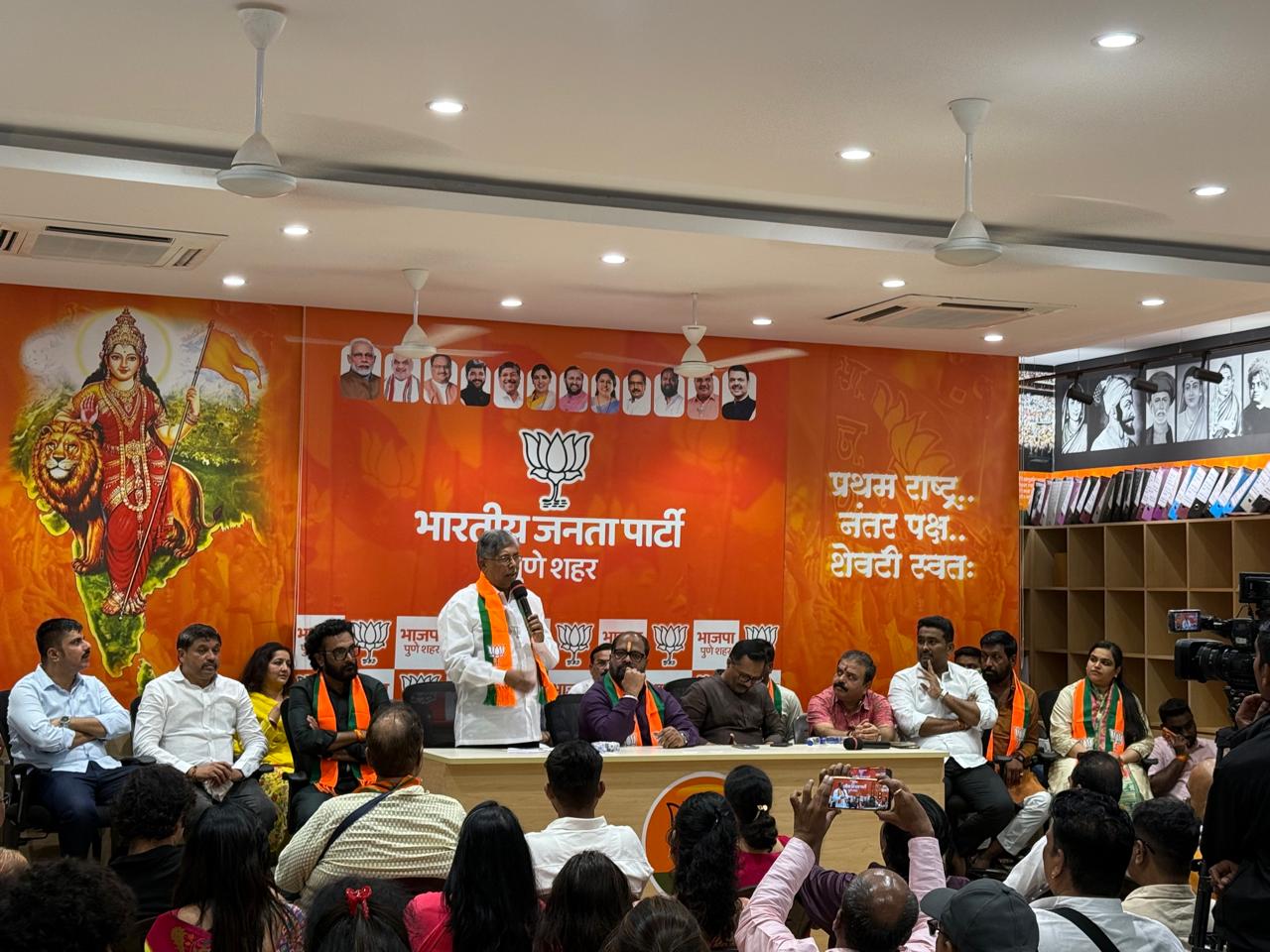
Pune’s political landscape saw a significant development on August 16, with three leaders from different political backgrounds formally joining the Bharatiya Janata Party. Pramod Nimhan, Pralhad Gawali and Dr Vaishnavi Kirad were inducted at the Pune city BJP office in the presence of Higher and Technical Education Minister Chandrakant Patil. The Pune BJP also publicly acknowledged the induction of the three leaders through its social media channels.
The development is noteworthy because the three entrants have previously been associated with different political organisations. Nimhan has a background in the NCP and has served as a corporator, while Gawali has been active with the Maharashtra Navnirman Sena. Kirad had earlier worked with the Congress and subsequently with the Shiv Sena led by Eknath Shinde. Their simultaneous entry gives the BJP additional local political faces with experience in different constituencies and organisational networks.
Nimhan’s move is particularly significant in the Pashan and adjoining areas. He had been associated with the NCP and was regarded as a prominent local leader. During the recent Pune civic election process, differences emerged after the NCP chose another candidate instead of Nimhan. He subsequently entered the electoral contest as an independent candidate on the whistle symbol. Reports state that he secured around 18,000 votes, although he did not win the seat.
The political equation in Ward 9, covering the Sus-Baner-Pashan belt, has also changed following the recent civic election. The official Pune Municipal Corporation winner list records Baburao Chandere as an NCP winner from one of the seats in the ward, while BJP candidates also secured seats in the same ward. This makes the entry of a locally established figure such as Nimhan relevant to the BJP’s future organisational calculations in the area.
Gawali’s entry brings another local network into the BJP fold. He has been active in the central Pune areas around Ravivar Peth and Nana Peth and has worked on community-oriented initiatives. His association with the annual Ganesh festival initiative organised through the Pralhad Gawali Mitra Parivar had previously brought him public visibility. MNS chief Raj Thackeray had also visited the initiative in 2023, according to reports.
Gawali’s decision is significant because he was associated with the MNS’s Pune city organisation. His shift to the BJP adds a local political organiser with an established presence in the city’s central areas. The move also indicates that the BJP is looking beyond traditional party structures to strengthen its grassroots network.
Dr Vaishnavi Kirad’s induction adds another dimension to the development. Kirad had earlier been associated with the Congress and later with the Shiv Sena’s Shinde faction before joining the BJP. Her political journey across different parties gives her familiarity with multiple local organisational networks.
The timing of the development has attracted particular attention. With no immediate election campaign dominating the political calendar, the BJP’s decision to induct leaders from the NCP, MNS and Shiv Sena faction has been interpreted as an exercise in strengthening its organisation well ahead of future political battles. However, the actual electoral impact of these inductions will depend on how effectively the new entrants are integrated into the BJP’s local structure.
The move also highlights the fluid nature of Pune’s local politics, where personal influence, grassroots networks and civic issues often play an important role alongside formal party affiliations. For the BJP, bringing leaders with established local connections into its fold could help consolidate its presence in areas where competition from rival parties remains strong.
For the NCP, MNS and the Shinde-led Shiv Sena, the departures represent a loss of local-level political manpower. At the same time, the BJP will now face the task of converting these individual political networks into a coordinated organisational advantage.
With the three inductions taking place together, attention is likely to remain focused on the BJP’s next moves in Pune and whether more local leaders from rival parties follow the same path in the coming months.