Monsoon Marvel: Tamhini Ghat Overtakes Cherrapunji as Maharashtra Witnesses an Unprecedented Rainfall Season
Tamhini Ghat Surpasses Cherrapunji in Rainfall | Maharashtra Monsoon 2026 Breaks Records
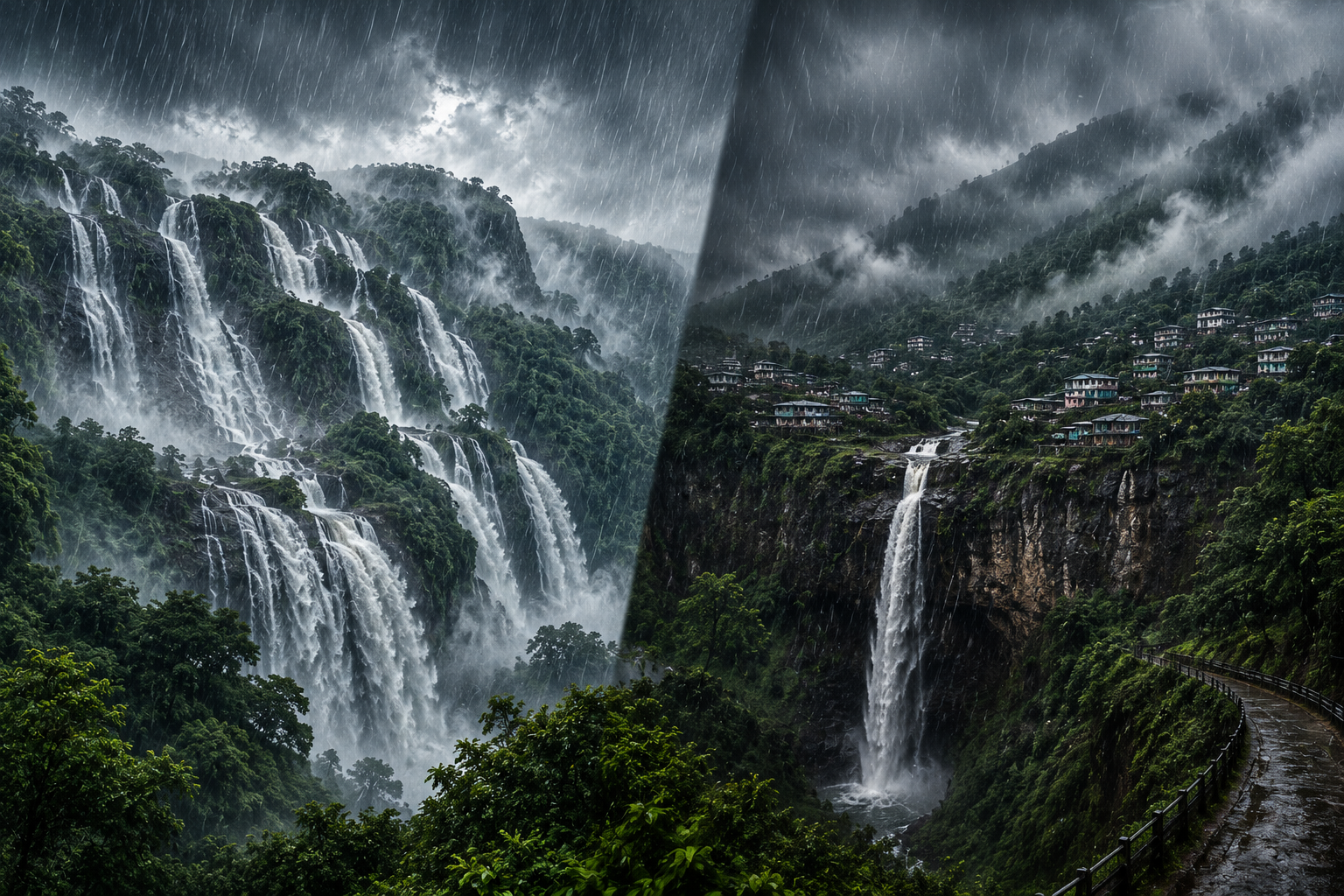
Pune, August 3, 2026: The Maharashtra Monsoon 2026 is rewriting weather history, and at the heart of this extraordinary season is Tamhini Ghat, which has stunned meteorologists by recording more than 6,000 mm of rainfall in just two months. Between June 1 and July 31, the scenic ghat section in Pune district received more rain than Cherrapunji, India's iconic rain capital, during the same period—a remarkable feat that highlights the sheer intensity of this year's southwest monsoon.
What makes the achievement even more extraordinary is that Tamhini has already accumulated rainfall equivalent to its annual average of 6,000 to 7,000 mm before the monsoon season has even reached its conclusion. Weather experts describe the rainfall pattern as one of the most exceptional witnessed across the Sahyadri mountain ranges in recent decades.
A 72-Hour Cloudburst That Changed the Season
The defining moment of the season came between July 6 and July 8, when Tamhini experienced an extraordinary burst of rainfall totaling 1,635 mm in just 72 hours. Such an intense spell ranks among the heaviest ever documented in the region.
Daily rainfall during the three-day deluge was equally staggering:
- July 6: 525 mm
- July 7: 530 mm
- July 8: 580 mm
This single weather event contributed a significant portion of Tamhini's annual rainfall and transformed waterfalls, rivers, and streams across the Western Ghats into roaring torrents.
Mahabaleshwar Records Its Wettest Day in 123 Years
The record-breaking monsoon was not limited to Tamhini. Mahabaleshwar, one of Maharashtra's most popular hill stations, also witnessed a historic rainfall season.
Between June and July, the town received nearly 5,500 mm of rainfall. On July 6, Mahabaleshwar measured 513 mm of rain within 24 hours, setting a new benchmark as the highest single-day rainfall recorded in its 123-year weather history. During the same three-day spell from July 6 to July 8, the hill station accumulated over 1,000 mm of rainfall, underscoring the intensity of the monsoon across the Sahyadri ranges.
Lonavala Smashes Every Previous Rainfall Record
The monsoon also rewrote the record books in Lonavala, where rainfall crossed 4,800 mm by the end of July.
The famous hill town experienced 670 mm of rain on July 5, followed by 620 mm on July 6, resulting in an astonishing 1,290 mm of rainfall in just 48 hours—the highest ever recorded there.
The relentless downpour temporarily disrupted road and rail traffic on the Mumbai–Pune corridor, causing delays and highlighting the widespread impact of the extreme weather.
Sahyadri Belt Emerges as Maharashtra's Rainfall Epicentre
This year's heaviest rainfall has been concentrated across the Western Ghats of Pune district, where locations such as Tamhini, Mulshi, Bhira, Ambavane, Davdi, and Lonavala have consistently recorded exceptional precipitation.
While these regions are traditionally among Maharashtra's wettest, the rainfall witnessed this season has surpassed normal expectations, making 2026 one of the most remarkable monsoon years in recent memory.
Fresh Spell of Heavy Rain Keeps Authorities on Alert
Heavy rainfall continues to lash the Sahyadri belt.
Rainfall recorded over the past 24 hours includes:
- Tamhini: 280 mm
- Davdi: 249 mm
- Shigarav Ghat: 240 mm
- Bhira: 223 mm
- Ambavane: 163 mm
- Lonavala: 149 mm
According to the India Meteorological Department (IMD), isolated locations across the ghat areas are still experiencing heavy to very heavy rainfall, while the rest of Pune district continues to receive light to moderate showers.
The persistent rain has kept rivers, reservoirs, waterfalls, and streams at high levels, prompting authorities to maintain close surveillance over flood-prone locations and vulnerable infrastructure.
A Monsoon Season That Will Be Remembered
From Tamhini Ghat overtaking Cherrapunji in seasonal rainfall to Mahabaleshwar recording its wettest day in 123 years and Lonavala registering its highest-ever 48-hour rainfall, the Maharashtra Monsoon 2026 has already etched its name into the state's meteorological history.
With several weeks of the rainy season still remaining, weather experts believe more rainfall records could be challenged if the current pattern continues. For now, the Sahyadri ranges stand transformed into a dramatic landscape of overflowing rivers, roaring waterfalls, mist-covered valleys, and relentless rain—offering both breathtaking beauty and a reminder of nature's immense power.