Parliament Set for High-Stakes Debate on Tougher Anti-Paper Leak Bill After Days of Protests
Parliament is set to debate the Public Examinations (Prevention of Unfair Means) Amendment Bill, 2026, after days of disruptions by the Opposition over the alleged NEET paper leak controversy and police action against protesting students. The proposed legislation seeks to introduce stricter punishments, higher fines, and fast-track courts to curb examination malpractice.
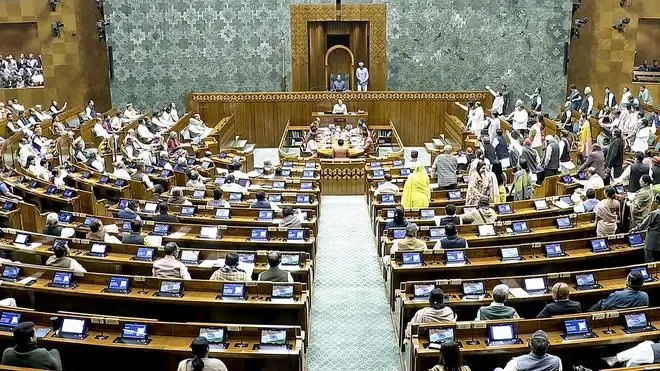
Parliament to Debate Tougher Anti-Paper Leak Bill Amid Opposition Pressure
After nearly a week of repeated disruptions during the Monsoon Session, Parliament is expected to hold a detailed debate on the Public Examinations (Prevention of Unfair Means) Amendment Bill, 2026 on Tuesday.
The proposed legislation was introduced in the Lok Sabha by Union Minister Jitendra Singh but could not be taken up immediately due to continuous protests by Opposition members demanding accountability over alleged police action against student protesters and the recent resignation of former Education Minister Dharmendra Pradhan.
Consensus Reached for Six-Hour Debate
Following discussions between Lok Sabha Speaker Om Birla and leaders of major political parties, both the government and the Opposition agreed to hold a comprehensive debate on the Bill.
The Speaker has allotted six hours for discussion, while Opposition parties have submitted 93 amendments, setting the stage for an intense parliamentary debate.
What the New Bill Proposes
The amendment significantly strengthens the Public Examinations (Prevention of Unfair Means) Act, 2024 with stricter penalties aimed at preventing paper leaks and examination fraud.
Key Provisions
•Minimum imprisonment increased from 3 years to 5 years.
•Maximum punishment increased to 10 years in prison.
•Fine increased from ₹10 lakh to ₹50 lakh for individuals found guilty.
•Service providers involved in examination malpractice may face fines of up to ₹5 crore.
•Service providers may also be barred from conducting public examinations for 8 years.
•Trials to be completed within three months after filing of the chargesheet.
•Establishment of fast-track courts for speedy disposal of cases.
•Time-bound investigations and daily court proceedings during trials.
Opposition Continues to Raise Questions
Opposition leaders continued to demand accountability over the alleged use of force against students during nationwide protests over the NEET paper leak controversy.
Congress President Mallikarjun Kharge accused the government of failing to protect students and demanded a statement from Union Home Minister Amit Shah regarding allegations of police excesses.
Leader of Opposition Rahul Gandhi also criticised the government, alleging that students were subjected to excessive police action in different states and questioned the government's earlier assurances regarding action against protesters.
Other Opposition leaders argued that stronger legislation alone would not resolve the issue unless existing laws are implemented effectively.
Government Defends the Bill
The government maintained that the amendment is designed to restore confidence in India's public examination system.
Parliamentary Affairs Minister Kiren Rijiju urged Opposition parties to participate in the debate, stating that the legislation directly concerns the future of millions of students.
Government leaders also pointed out that several steps have already been taken, including the resignation of the former Education Minister, the proposal for fast-track courts, and reforms to strengthen examination security.
Focus on Restoring Trust
The proposed legislation comes amid nationwide concern over examination irregularities and growing demands for greater transparency in recruitment and entrance examinations.
With dozens of amendments on the table and both sides preparing detailed arguments, Tuesday's debate is expected to become one of the most significant discussions of the ongoing Monsoon Session.
The outcome of the debate could shape India's future framework for preventing paper leaks and ensuring greater accountability in public examinations.