Parliament Day 7: Priyanka Gandhi Questions Pellet Gun Use on Students as Lok Sabha Debates Anti-Paper Leak Bill
The seventh day of the Monsoon Session witnessed a heated debate in the Lok Sabha as Congress MP Priyanka Gandhi Vadra questioned the government's handling of student protests, demanding to know who authorised the alleged use of pellet guns against students. The discussion took place alongside the debate on the Public Examination (Prevention of Unfair Means) Amendment Bill, 2026.
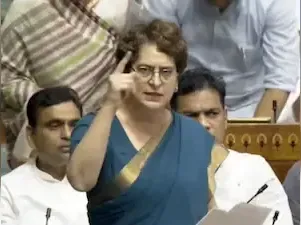
Priyanka Gandhi Questions Government Over Pellet Gun Use During Student Protests
The Monsoon Session of Parliament saw another stormy day on Tuesday as Congress leader Priyanka Gandhi Vadra strongly criticised the Centre over its handling of student protests linked to the alleged NEET paper leak controversy.
Speaking in the Lok Sabha, Priyanka Gandhi questioned who had authorised the alleged use of pellet guns against protesting students during the July 20 demonstrations in New Delhi. She asked whether students demanding accountability were being treated as criminals and sought answers from the government regarding the police action.
Her remarks added to the ongoing political confrontation over the Centre's response to the nationwide protests that have continued for several weeks.
Opposition Demands Accountability
During the debate, Opposition leaders accused the government of failing to protect students while responding with excessive force during demonstrations.
They demanded accountability for the alleged police action, including reports of pellet gun use, lathi-charge, and the registration of criminal cases against protesters. The Opposition argued that students seeking justice should not be subjected to force.
Lok Sabha Debates Anti-Paper Leak Bill
Alongside the political exchanges, the Lok Sabha took up discussion on the Public Examination (Prevention of Unfair Means) Amendment Bill, 2026.
The proposed legislation aims to strengthen the legal framework against examination malpractices by introducing stricter punishment for paper leaks, organised cheating, and examination fraud. The Bill proposes tougher penalties for individuals, organised groups, and institutions found involved in compromising the integrity of public examinations.
The government maintained that the legislation is intended to restore public confidence in the examination system and safeguard the future of millions of students.
Government Defends Its Stand
Responding during the session, Union Parliamentary Affairs Minister Kiren Rijiju urged Opposition members to participate in the discussion rather than disrupt House proceedings.
He reiterated that the government is prepared to debate the issue of examination reforms and emphasised that several measures have already been initiated to improve transparency and accountability in public examinations.
Political Tensions Continue
The alleged NEET paper leak and the subsequent student protests have become one of the most contentious political issues of the Monsoon Session.
While the Opposition continues to demand accountability for both the examination controversy and the police response, the government has maintained that it is introducing stronger laws and institutional reforms to prevent future irregularities.
The debate is expected to continue as Parliament considers the Anti-Paper Leak Bill and other proposals aimed at strengthening India's examination system.