E20 Fuel Controversy: Why Are Vehicle Owners Demanding the Return of Pure Petrol?
A growing online campaign questioning India's E20 fuel policy has sparked nationwide debate. Vehicle owners claim reduced mileage and possible engine damage, while the government dismisses the allegations as misinformation driven by vested interests. Here's everything you need to know.
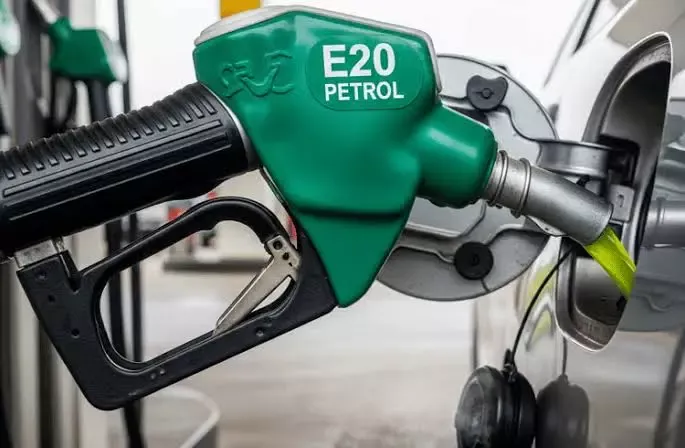
E20 Fuel Controversy: Why Are Vehicle Owners Demanding the Return of Pure Petrol?
A fresh controversy has erupted over India's E20 fuel policy, with thousands of vehicle owners taking to social media to question the government's push for ethanol-blended petrol.
The online campaign, operating under the name "E20 Janata Party," has gained significant traction, with users sharing their experiences and raising concerns about the impact of E20 fuel on vehicles.
What Is the E20 Fuel Debate?
Many vehicle owners participating in the campaign claim that using E20 fuel has resulted in:
•A reduction in fuel efficiency by 8–15%.
•Performance issues in certain vehicles manufactured before 2023.
•Concerns over long-term engine durability and fuel system components.
Supporters of the campaign are urging the government to review the mandatory rollout of E20 fuel and provide consumers with more fuel options.
Consumer Court Order Adds to the Discussion
The debate intensified after a Consumer Court in Chhattisgarh ruled in favour of a vehicle owner in a dispute involving Maruti Suzuki.
According to reports, the court directed the company to replace the customer's car and pay ₹1 lakh as compensation after the owner alleged that E20 fuel had damaged the vehicle's engine and fuel tank.
While the order has drawn widespread attention, it relates to an individual case and does not, by itself, establish that E20 fuel causes similar problems in all vehicles.
Demand for Choice at Petrol Pumps
Consumer rights groups and several vehicle owners are now demanding that petrol pumps offer customers a choice between:
•E20 ethanol-blended petrol, and
•100% pure petrol.
•They argue that consumers should be free to decide which fuel is most suitable for their vehicles.
•Government Rejects the Allegations
•Union Road Transport and Highways Minister Nitin Gadkari has rejected the allegations against E20 fuel.
According to the Minister, the campaign is being driven by a fuel import lobby and is politically motivated. He has maintained that ethanol blending is an important step toward reducing India's dependence on imported crude oil, supporting farmers, and promoting cleaner energy.
Why Was E20 Introduced?
The E20 policy aims to blend 20% ethanol with petrol to:
•Reduce crude oil imports.
•Lower carbon emissions.
•Support India's ethanol production industry.
•Increase income opportunities for farmers supplying ethanol feedstock.
The government has repeatedly stated that newer E20-compatible vehicles are designed to operate safely on the blended fuel.
The Bigger Question
The ongoing debate has highlighted two competing viewpoints.
On one hand, many vehicle owners believe E20 fuel affects mileage and may damage older vehicles. On the other, the government maintains that the fuel is safe for compatible vehicles and that misinformation is fuelling unnecessary concern.
As discussions continue, many consumers are calling for greater transparency, independent technical studies, and the option to choose between E20 and pure petrol at fuel stations.
Whether the controversy leads to policy changes remains to be seen, but it has certainly sparked a nationwide conversation about fuel quality, vehicle compatibility, and consumer choice.